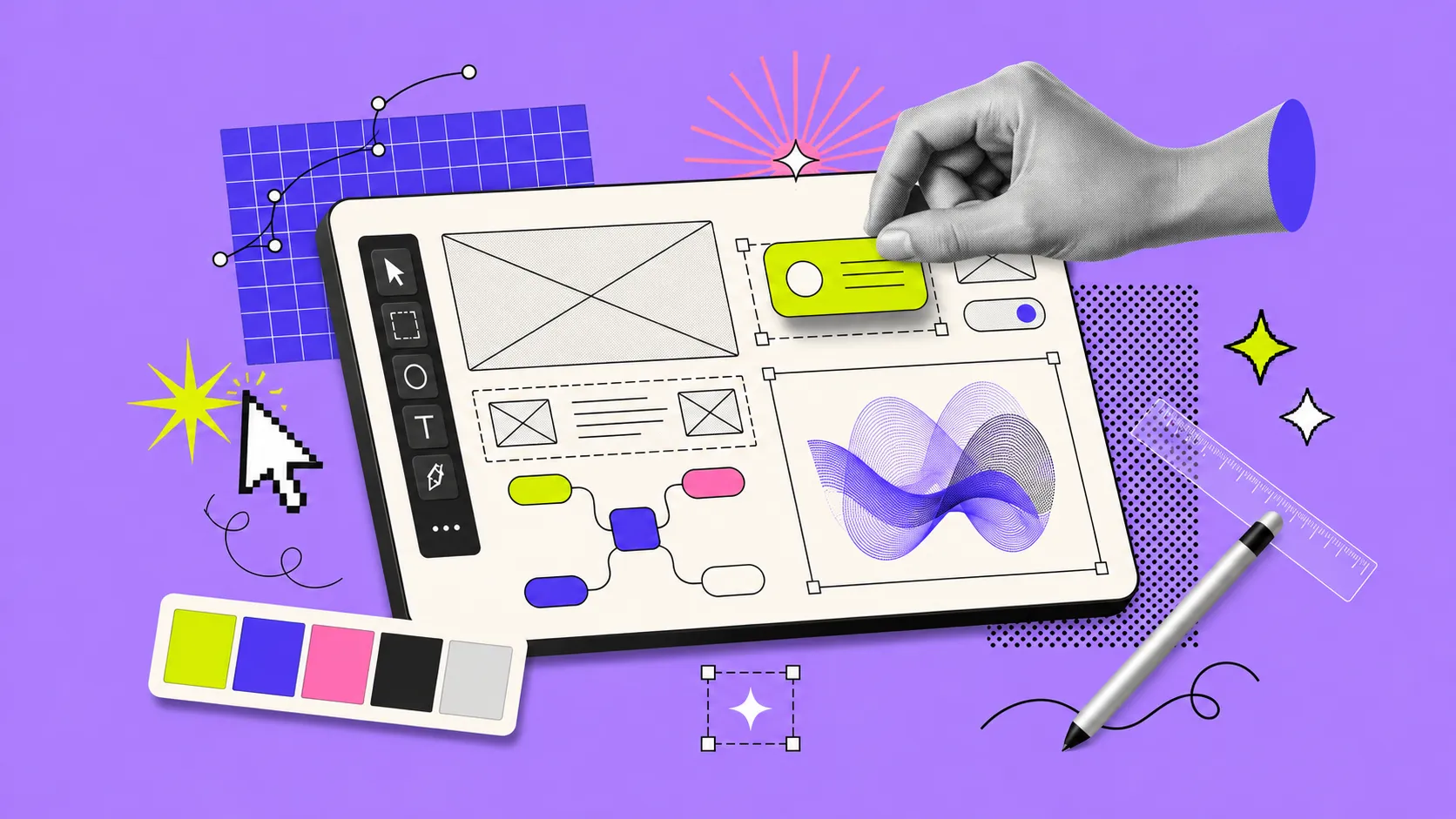
AI design tools have moved from novelty to everyday use in a very short time. Designers now generate images, layout ideas and even working prototypes from a few lines of text. For businesses planning a new website, this raises fair questions about cost, speed and creativity.
What to Know
AI design tools can now generate images, layouts and early prototypes in minutes. They speed up exploration but still depend on human judgement for quality and direction. Businesses can expect faster projects and more options to choose from. And the strongest results come from combining AI speed with experienced designers.
The AI Revolution in Design
Image generators such as Adobe Firefly and Midjourney can produce illustrations, backgrounds and concept visuals from a written description. Figma, the design tool used by many web design teams, has added AI features that can generate layouts, suggest content and turn ideas into working prototypes. Tasks that once took hours, such as resizing assets, removing backgrounds or creating placeholder content, now take seconds.
For designers, this means less time spent on repetitive production work and more time available for thinking, testing and refining ideas.
How AI Is Shaping Modern Design Workflows
The biggest change is at the start of a project. Designers can explore far more directions in the early stages, generating mood boards, layout variations and visual concepts quickly, then choosing the strongest ideas to develop.
AI also helps with the steps that follow. It can draft placeholder text, suggest colour palettes, create variations of a component for different screen sizes and help turn designs into early code. The boundary between design and development is becoming less rigid, with designers able to test ideas in working prototypes much sooner. What has not changed is the need for someone to decide which ideas are right for the brand, the audience and the business goals.
What Does This Mean for Web Design Clients?
For businesses, the effects are mostly positive. Projects can move faster, especially in the early stages, and you are likely to see more options before choosing a direction. Prototypes can feel more realistic earlier, which makes feedback easier and reduces surprises later.
But AI also makes it easy to produce websites that look polished yet generic. Many AI-generated designs draw from the same patterns, so they can look similar to everything else. The value of a good design partner now lies even more in strategy, originality and understanding your customers, not just in producing screens.
The Benefits of Combining AI with Human Expertise
The best results come when AI and people each do what they are good at. AI handles speed and volume: generating options, preparing assets and automating repetitive work. Designers bring judgement: understanding the brand, the audience and the business goals, choosing the right ideas and refining them until they work.
People also take responsibility for quality. They check that images are appropriate and accurate, that designs are accessible, that content is correct and that the final website performs well on real devices. That combination delivers websites faster without sacrificing the originality and care that make them effective. Our earlier guide on AI search shows the same principle at work in SEO: AI raises the bar, and expertise is what clears it.
What Comes Next?
AI design tools will keep improving, and they will become a normal part of every design team's toolkit. The businesses that benefit most will be the ones that use them thoughtfully: to explore more ideas, move faster and spend more time on what matters, while keeping human creativity and judgement at the centre.
At 3KITS, we combine human creativity with AI-powered tools to design websites that are distinctive, fast and built around your customers. If you are planning a new website or a redesign, call or WhatsApp us on +91 90304 16219.